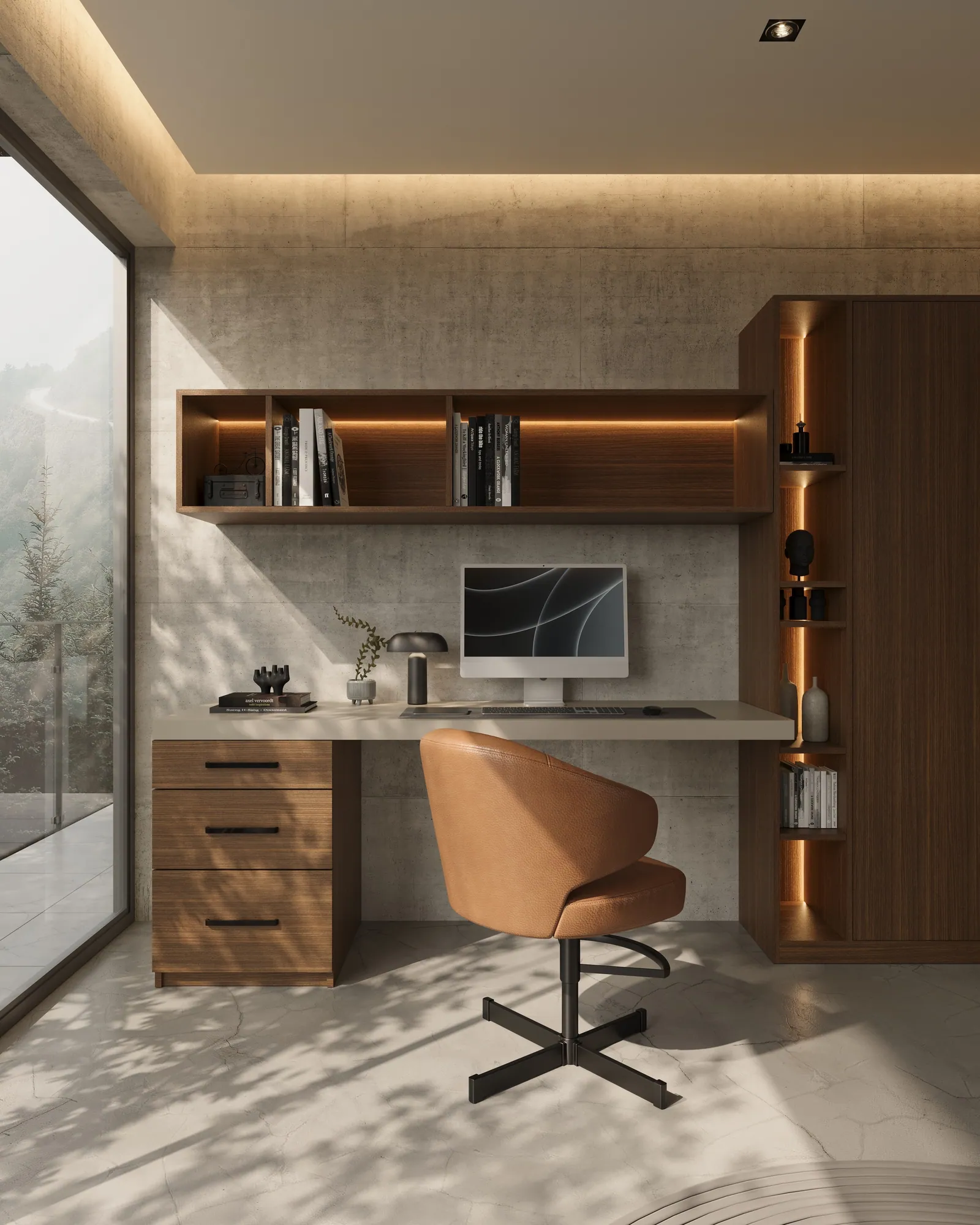
Luxury in a closet is not more — it is precisely enough, executed without compromise. Notes on proportion, material, light, and restraint.
Luxury is the most misused word in interiors. In closets, it has come to mean spectacle: mirrored islands, gilded hardware, showroom lighting calibrated for photographs rather than mornings. That is decoration. It is rarely luxury.
True luxury closet design is quieter and far more demanding. It is precisely enough — nothing missing, nothing extra — executed without compromise. It is felt in the weight of a drawer, the temperature of the light, the silence of a door meeting its frame. After more than five decades of building for California's most refined homes, we hold to a handful of principles.
Proportion Before Material
The instinct is to begin with finishes. The discipline is to begin with proportion. A dressing room with perfect veneers and wrong proportions will never feel composed; a room with modest materials and exact proportions always will.
Luxury closet design starts with the architecture: ceiling height honored to the plane, verticals aligned with the room's datum lines, hanging and shelving composed in a rhythm the eye reads as calm. As we argued in The Anatomy of a Custom Closet, storage should complete the room, not compete with it. Proportion is what separates a closet you admire from a closet you feel.
The Walk-In as a Private Room
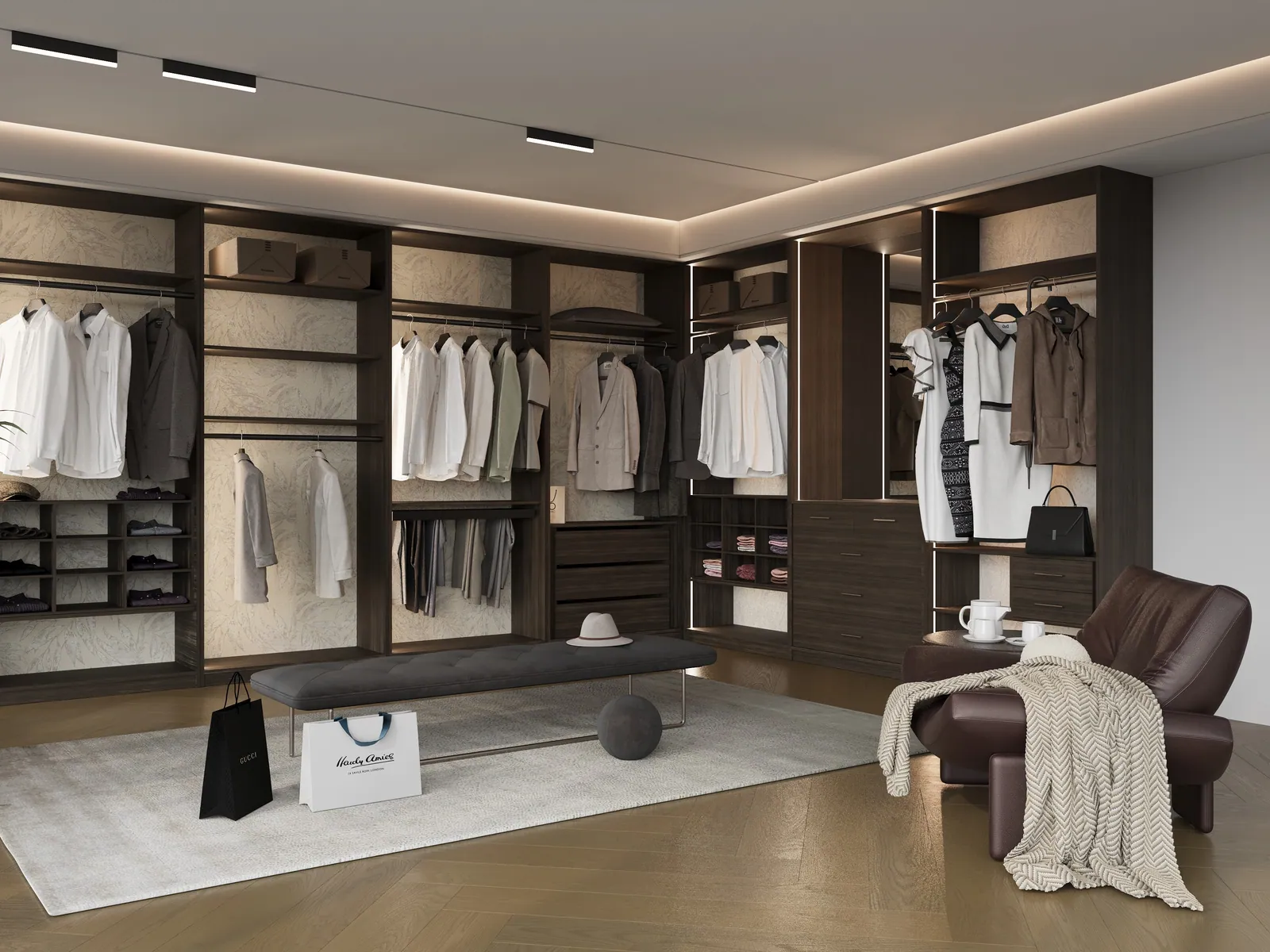
The finest walk-in closets are not corridors of shelving. They are dressing rooms — private interiors with their own logic of light, circulation, and repose. A place to begin and end the day with a certain order.
Designed this way, the walk-in closet earns the same attention as a library or a study: a bench placed where morning light falls, garments arranged by ritual rather than category, a mirror positioned for honest, flattering light. The measure of success is not capacity. It is composure.
Few Materials, True Ones
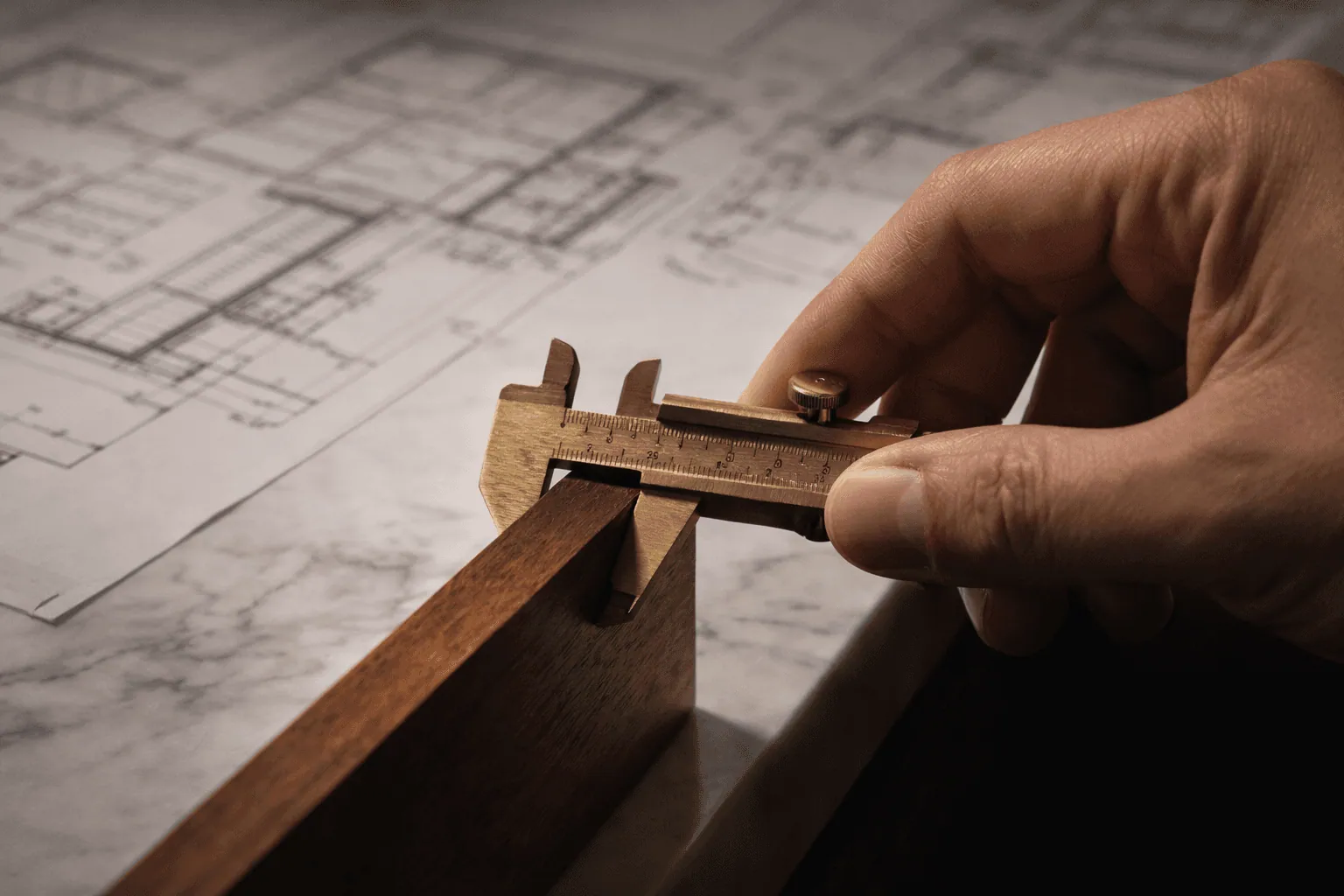
Luxury is not the number of finishes; it is the truth of them. Our palette is deliberately narrow — European oak, balanced veneers, leather-lined drawers, hardware in quiet metals — chosen to age with the home rather than date it.
What matters is what you touch: the pull of a drawer on precision runners, the density of a shelf that will never bow, edges finished as carefully inside the cabinet as outside. These are the details no photograph captures and every owner knows within a week.
Light Is the Material You Feel Most
Nothing betrays an ordinary closet faster than ordinary light. Integrated LED — vertical, warm, dimmable, rendered for true color — is the single most transformative element in luxury closet design. Garments read faithfully. Oak grain gains depth. The room acquires the calm of a well-lit gallery, scaled to a private life. We explored the craft of it in Vertical Light: Integrated LED in European Oak.
Light is engineered into the millwork from the first drawing — channels routed before finishing, color temperature matched to the home — never clipped on afterward.
Concealment Is the Highest Luxury
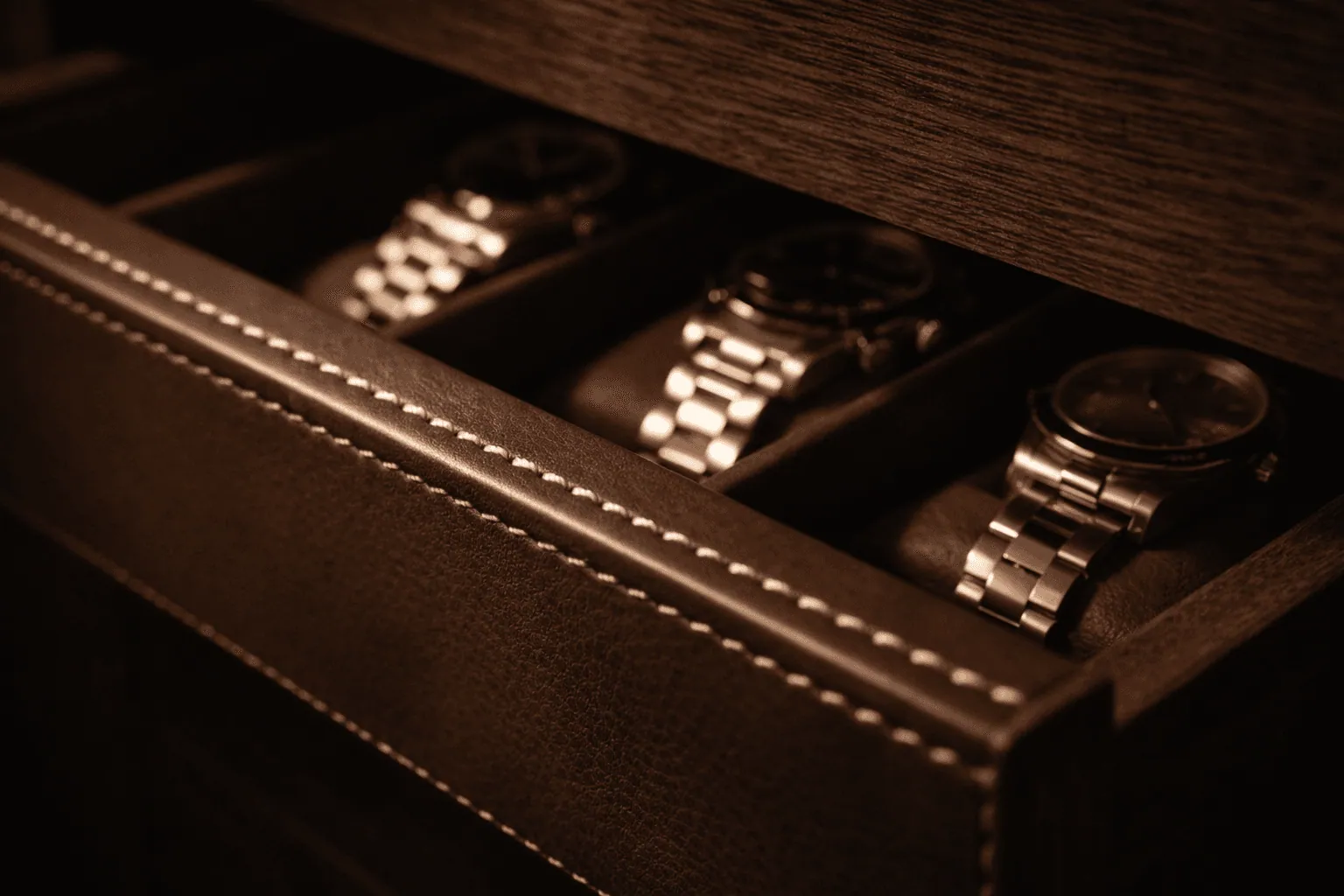
What is hidden defines what is seen. Jewelry drawers that present themselves only when asked. Hampers, safes, charging, and seasonal storage absorbed invisibly into the millwork. Hardware that falls silent. The room shows one thing: order.
This restraint is the discipline of quiet luxury — the confidence to let a single grain of oak, a single line of light, carry the room.
Designed for California Residences
A dressing room in a Newport Beach primary suite, a Laguna Beach bluff house, an Irvine family residence, a Palm Springs desert estate — each asks different questions of material, climate, and light, and each deserves its own answer. Our portfolio across these communities is a record of rooms studied closely since 1969, not a catalog repeated.
How It Begins
Every commission opens with a private in-home consultation. We walk the space, measure, and listen; a tailored design direction follows — plans, elevations, materials — refined until the design feels inevitable. Architecture first. Storage second. Designed for permanence.
Frequently Asked Questions
What defines luxury closet design?
Not spectacle — precision. True luxury closet design is architectural: exact proportion, few and true materials, integrated lighting, and concealment of everything mechanical. The result reads as a serene, permanent room rather than installed product.
What is the difference between a walk-in closet and a dressing room?
Scale of intent. A walk-in closet stores; a dressing room composes — seating, mirror light, circulation, and repose designed together as a private interior. Most Vallier walk-ins are conceived as dressing rooms.
Which materials are best for a luxury closet?
Fewer, truer ones: European oak and balanced veneers for structure and warmth, leather for lined drawers, quiet metal hardware engineered for decades of daily cycles. Longevity is the material standard — the closet should age with the home.
Do you collaborate with architects and interior designers?
Regularly. In new construction we coordinate from framing onward; in remodels we design to the existing architecture. The finished millwork should read as original to the residence, whoever drew the walls.
Considering a dressing room or luxury closet for your home? Begin with a private in-home consultation across Newport Beach, Laguna Beach, Irvine, and Palm Springs. Request a design consultation.