Millwork, cabinetry, and furniture
The three words get used as if they were one product. They are not. Furniture is freestanding. Custom cabinetry is built to order and fixed to the wall, usually as modules. Architectural millwork is continuous, scribed to one wall, and stays with the house. The fit, the resale treatment, and the price all follow from which one you are actually buying.
The longer comparison, including where each belongs, is millwork vs. cabinetry vs. furniture. Closet anatomy — joinery, edges, what happens at the ceiling — is in the anatomy of a custom closet.
Where it belongs beyond the closet
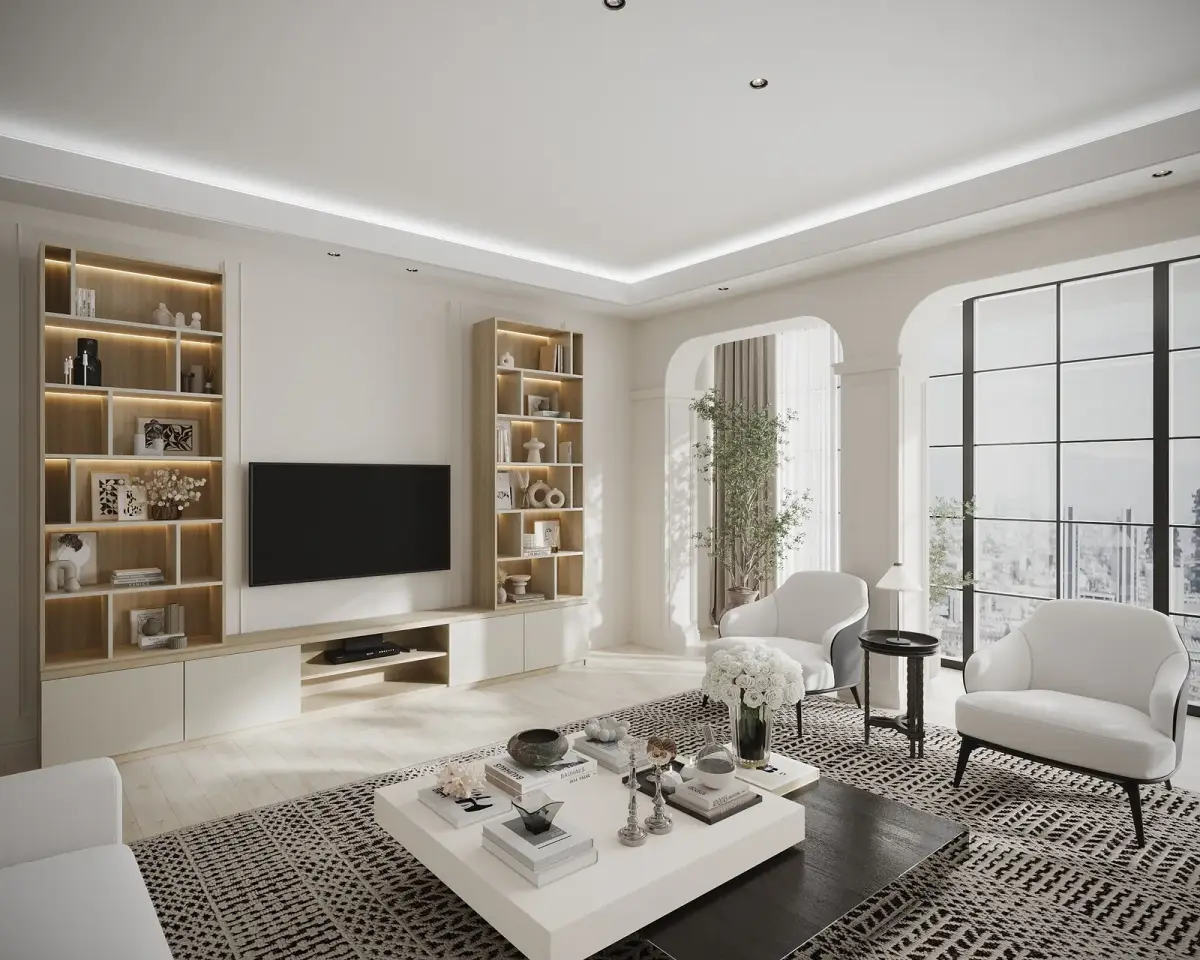
Closets and pantries are where most people meet custom cabinetry. The same work applies to a media wall with the screen recessed and the cables inside the carcass, a library that runs to the ceiling and turns a corner, a wet bar that includes the fridge and the sink instead of leaving a gap for them, a window seat built to the bay, and paneling that makes the cabinet next to it look original.
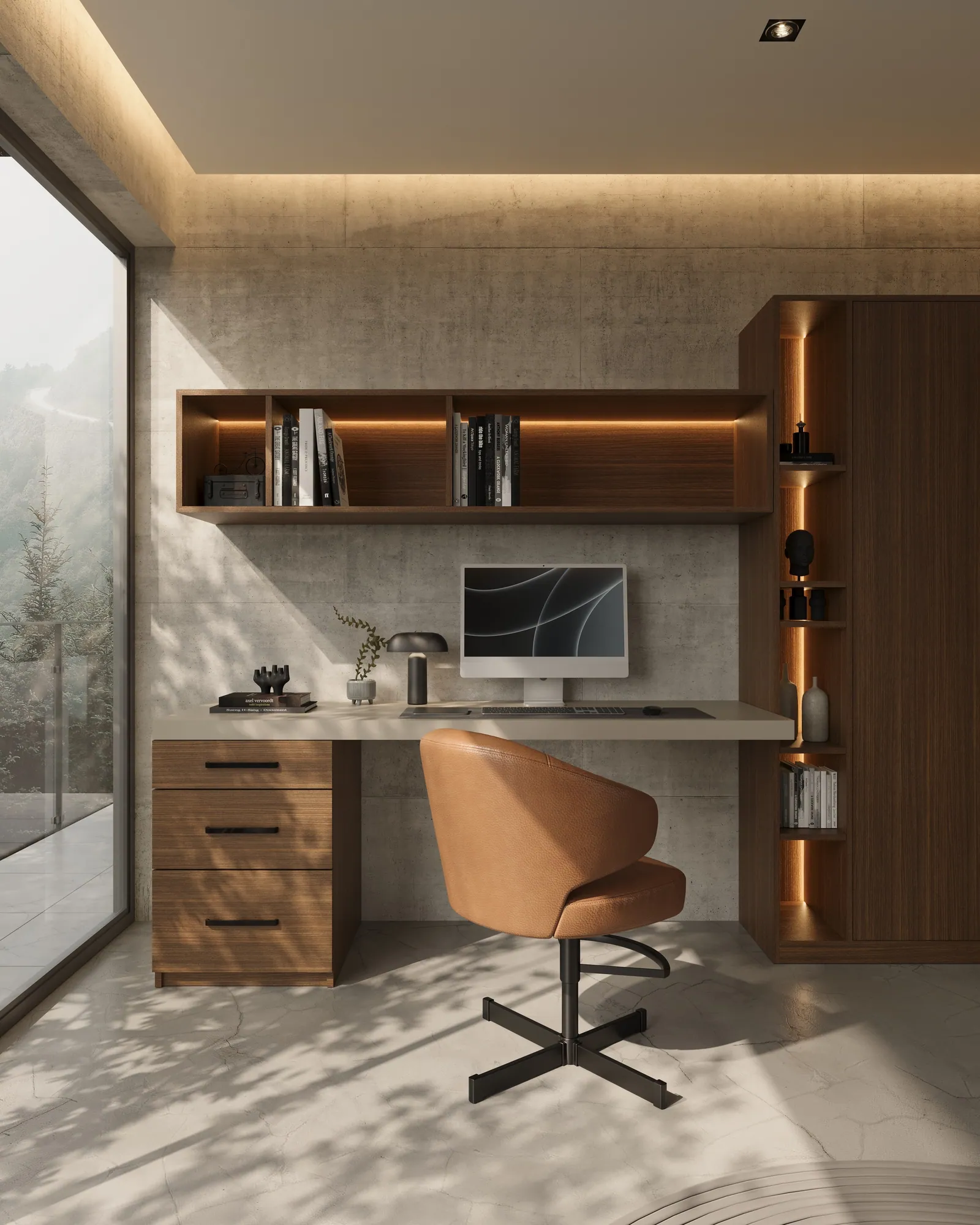
Home offices, mudrooms, and children's rooms use the same millwork. They are covered on the services overview and in the journal, because the search demand for those rooms is smaller than for closets. The standard of the work is not.
How it is built
An in-home consultation measures the actual wall. Shop drawings are engineered to that wall. Fabrication happens in our shop. Installation includes scribing to a ceiling, a floor, and a wall that are never perfectly square, so the seam disappears. A factory box cannot do that last step.
A single room is typically delivered in about 8 weeks from first consultation to installation. Whole-home commissions range from 12 to 20 weeks. Pricing follows the same tiers as the cost guide: per linear foot, modular systems roughly $125–$300, semi-custom $300–$600, and architectural millwork $1,000 and up. Those are market ranges for comparing like with like. Vallier prices the proposal, not a unit rate on a website.
Millwork vs. cabinetry Anatomy of a closet Cost guide
Frequently asked questions
What is the difference between millwork and cabinetry?
Cabinetry is a kind of millwork: the boxes with doors, drawers, or shelves. Millwork also includes paneling, trim, and window seats that have no cabinet in them. Furniture is the piece that is not attached and that you take when you move.
Is millwork the same thing as custom cabinets?
Custom cabinets are built to order and fixed in place. Architectural millwork goes further: it is continuous, scribed to one specific wall, and finished as part of the room. A closet system of modules can be custom cabinetry without being fully integrated millwork.
Does built-in cabinetry stay with the house?
Millwork that is fixed to the structure stays. It is treated as a fixture, unlike a dresser or a bookcase you can carry out. That is a practical difference on the day you sell, and it is why the fit to the architecture matters.
Where else do you design millwork, besides closets?
Libraries, media walls, wet bars, window seats, paneling, pantries, laundries, home offices, mudrooms, and children's rooms. The consultation and the shop process are the same. The room changes the drawing.
How long does custom millwork take?
A single room is typically delivered in about 8 weeks from first consultation to installation. Whole-home commissions range from 12 to 20 weeks.
How is millwork priced?
The market often quotes a linear-foot range — roughly $125–$300 for modular, $300–$600 for semi-custom, and $1,000 and up for architectural millwork. We do not sell from that unit. A proposal after measuring the wall is the price.
Call (949) 200-6778 or [email protected] to book the in-home consultation.